- 11 Posts
- 25 Comments




 2·10 months ago
The problem is that these social media sites have UIs that are addictive by design, and full of dark patterns. Putting that UI onto another domain name, owned by another company or organization, does not solve this problem. Replacing X with Mastodon does not solve that, even when the people running Mastodon have good intentions.
And “Addictive by Design” does real damage.
We need to think a bit sharper to get out of that hole we have dug ourself in.

Oh, I see I made an error here:
The page I cited gives the power consumption in Ampere, it is 0.360 Ampere.
This is not, and this is what I overlooked, equal to the power consumption in Watt.
What applies here is the formula
P = I * Uwhere I is current in Ampere, U is Voltage, and P is Power in Watt. And while I is 0.36 Ampere, U is 5.1 Volt (see www.raspberrypi.com/products/power-supply) , so the real power consumption is
1.85 Watt (instead of “half a Watt”).
The 5 A charger can deliver 25.5 Watt.
You seem to assume that intelligent humans are only capable of posting stuff on Xitter and Facebook.
Writing text in Gemini format is simpler than Markdown, which is what people are using here.
Reading Gemini context only requires a client, for example an Android app like Rosy Crow, or using a Web gateway, like https://gemini.tildeverse.org/ , or https://portal.mozz.us/gemini/mozz.us/ .
Publishing a Gemini blog requires at the minimum only to get an account at a pubnix server (such as the tildeverse servers above).
If one wants to self-host it, one needs only to set up a Rasberry Pi running the server program. The complexity is about the same as running a file sharing client.
Yet some people want to frame it as if the only way to participate in the Internet is to use Facebook and Twitter.
accessible technologies
In respect to accessibility, the fact that Gemini focuses on actual text content makes it far easier to use accessibility tools like screen readers and Braille displays.
In fact, what is a real advantage is that there are also Genini clients which display in the terminal, and you can adjust the font size as you actually need. Myself I used that a lot when I had bad eye problems a while ago.
A typical web page today transmits many Megabytes of data for at most a few kilobytes of real information. And much if that data is unnecessary JavaScript code which executes on the client, costing bandwith and power - for the sole purpose of ads and tracking.
GenAI-geberated pseudoinformation uses even more power.
Gemini omits all that. That’s why it is lightning fast (and far more comfortable to read, like an eBook).
To your argument that the Internet and the WWW are decentralized:
On the level of the TCP/IP protocol, it is decentralized in the sense it can route around failures (it was designed to survive a nuclear attack).
(As an aside, the routing protocols, specifically BGP, can however be manipulated - that happened during the attack on Venezuela. It can also be blocked, see Iran - throwing a black veil on many people’s death.)
But in respect to how the modern web of HTML/HTTP is set up and used, it is not decentralized at all:
- Every street food shop seems to need a FaceBook page
- Individuals communicate mainly over WhatsApp
- Teens use mainly Instagram and TicToc
- Community-Owned web forums have almost disappeared, most moved to Facebook, and personal blogs are dying out
- most private web sites use Google and Facebook tracking devices, like like buttons, tracking pixels, Google analytics, fingerprinting, and so on
- Sites like medium.com, originally meant for personal writing by people who put in time, are succumbing to commercialization and AI slop
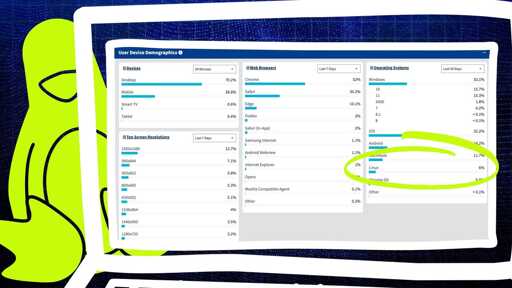
- The only open source browser code base, Firefox, has sunken to 2.2% market share. This means that Google can push things like DRM into Web standards which means the browser is running software which by principle is not controlled by the user, but by somebody else. This is very bad!
- ECommerce runs dominantly on Amazon Web Services (AWS), and Microsoft Azure
- Payments use dominantly PayPal
To sum up, without very few large and (in many senses of the word) power-hungry US companies, namely Google, Facebook, Microsoft, Paypal, Apple, the WWW and with it, a good part of the European ecobomy, would come to a standstill.
Put plainly, they can more or less switch Europe off if they want.
And we can’t even have political discussions on European matters without Google and Facebook tracking this.
Gemini is fine for:
- microblogs
- personal blogs
- sharing photos the simple way
- journals
- news, see gemini://taz.de/
- thoughtful political discussion (via interconnected blogs)
- long form texts which benefit from a distraction-free reading experience
- simple wikis with many interconnected pages, for example software documentation
- hosting static media like photos, pictures, videos, documents
- sharing source code and zipped git repos from small open source projects
What it doesn’t serve is the so-called attention economy.
See also my more comprehensive comment in the Linux thread:
Computers need more power when booting, because they are busy then and have a lot of input from starting processes etc.
The Raspberry Pis are no exception to this. And the USB specification provides the necessary power for booting.
In my experience, you might need more than the 3A power supply when booting a Pi when it is connected to more than one hard disk.
On the other hand, in a server process, the server is usually most time idle waiting for input, and working a tiny part of the time to respond to the input. That’s especially true for the Genini protocol where the server mostly copies data from a file to the socket, prepending the MIME type and some essential header data. This is not computing-intensive. Also, a Gemini server can run fine from an internal SD card, say with 32 GB size. No hard disk needed.
What is causing confusion here is mixing the specified maximum power requirement with the average power required to run the server. And the power-hungryness of the “modern web” was what I was referring to (and I think this was not ambiguous).
also your power figure is off by a factor of ten, an rpi needs 5W when running and up to 12 on boot which is why the official power supply is rated for 3A.
That’s incorrect. I knew what I wrote because I care about this and I researched exactly this when I built my own Gemini Server with a Raspberry Pi B. Such a server is the overwhelming part of the time idle. And when idle, the Raspberry Pi B draws around 360 Milliwatt, or 0.36 Watt.
Here are the measurements:
https://raspi.tv/2016/how-much-power-does-raspberry-pi3b-use-how-fast-is-it-compared-to-pi2b
And moreover, an USB power supply does not draw its rated power when the energy is not consumed (it can’t physically, it would become quite hot). Powe supplies sold in the EU draw max 1 W idle due to EU regulations.
But even better, a Raspberry Pi connected to an Internet router like a FritzBox does not need an own power supply. It can be powered by the routers USB ports which are there for example to plug in flash memory sticks.
And this actually works well - that’s how I built mine. So, it draws 0.36 Watt of power.
The question is, why do you state things here that are not true? Who would be interested in spreading misinformation on the topic of a decentralized, democratic from the base information infrastructure?
Of course, Gemini is also a social endeavour. Such projects are created, nourished and grown by communities.
But technical decisions and design choices also embody values and political goals. You do not build nuclear weapons to combat world hunger and things like Facebook and Grok do not exist to promote democracy.
- what do you mean by “complex” ?
A gemini server only needs the folder with the public pages as configuration. Certificates are generated automatically.
- How do you make your Gemini website? And how is it less complex than copying a bunch of HTML files from one’s computer to one’s web server?
Gemini uses a markup language which is simple - simpler than markdown (which is used on feddit).
It is described here:
https://gemini.flounder.online/docs/gemtext.gmi
It can be edited on the server with tools like midnight commander or WinSCP or notepad++. There exist a number of options how to edit these files on the server.
Or one writes it with a text editor and copies the files.
Well, I’d guess that 99% of WWW pages do advertising and tracking, and if you include personal pages on Facebook, Instagram and whatnot, it is probably over 99.99%. With Wikipedia and Arch Wiki as notable exceptions that comes to my mind.
In the meantime, exactly 0.0 % of gemini protocol pages do advertising and tracking. How come?
You keep repeating that.
But tracking and advertising have certain technical requirements to techniques which the gemini protocol does not offer. For example linking to Facebook like buttons or Google Analytics or client-side Javascript.
Gemini does not offer that.
And if you think different, show me a single gemini website with ads.
You can start here, in a HTTP gateway:
https://portal.mozz.us/gemini/mozz.us/
or
https://portal.mozz.us/gemini/taz.de/?
or
https://portal.mozz.us/gemini/geminiprotocol.net
or here
And the thing is that the modern Internet is not built any more for this. It is a pure perversion of what Tim Berners-Lee wanted and created at CERN.
Yeah but it is all the difference if the server is google.com , or your friend’s.
The whole concept is based on decentralisation.
Also
gemini://tobykurien.com/microblog.gmi for example.
(https://portal.mozz.us/gemini/tobykurien.com/microblog.gmi on a gateway from the HTML-Web.)
A simple Android client is called deedum, I guess you get it from f-droid. I am using the amfora client on the laptop to read longer texts.
That’s what I do for my blog (static, only HTML/CSS, no script, no nothing) and it works fine… within the usual web browser.
Yeah but then you need a web server, complex config for it, security updates, and so on.
Gemini is far simpler and the reader has certainty that he/she is not served any advertising.
taz, a German newspaper, publishes under gemini://taz.de . Free of charge (they are asking for donations). And it is very pleasant to read in this way, so I am sending them some bucks!



Taiwan does this differently, and it works better:
https://www.rnz.co.nz/news/thedetail/578364/how-taiwan-is-leading-the-way-in-the-fight-against-disinformation
https://en.tfc-taiwan.org.tw/disinformation/
https://www.dandc.eu/en/article/how-taiwan-has-reduced-social-polarisation-and-become-more-resilient-disinformation